
TASTE Community Interviews: Inside the Chill Zone
Ever wonder what a chef's fridge(s) look like inside?

I teach applied recipe development to help readers create the aesthetic of living and cooking they want in their lives. I don’t just publish recipes; I teach you how to become a better cook, a better baker ~ aesthetically.
(TASTE Tip: Don’t forget to check What’s Next? at the bottom of the page. I’m launching a series of national and international food writer interviews called The Geography of Taste.)
I hope you enjoyed a peak into a cookbook interview in my last post entitled, “TASTE Community Reads: Cookbooks That Spark My Cooking Life”.
Another interview opportunity came my way from the equally generous and wonderful Lynn Hill, who helms Foodstak, a remarkable resource for Substack food writers to build community and readership.
This interview is a look “behind closed doors,” if you will ~ inside my refrigerators! The interview questions and answers follow.
“Other People’s Fridges: Q&A with Linda Naylor
“I pay little or no attention to best-by dates as they’re for the manufacturer’s benefit only.”
“Please tell us a little about yourself and your publication.
“Who am I | What is TASTE Pacific Northwest?
“I’m an encore career chef living in Oregon among the most beautiful vistas in the United States ~ and the most dedicated, creative food people.
“For twenty-five years I was at the helm of a Midwest professional services business. In 2014 I moved to Oregon to attend culinary school. Two years later I had a Baking & Pastry Management degree from the Oregon Culinary Institute. For five years I was pastry chef at a Portland Metro trattoria, responsible for the daily dessert menu, wine dinner desserts, catered events and retail confections. I supervised one very talented pastry cook.
“I shed an entire clothing size!
“When everyone was sent home in 2020, my partner and I founded a boutique confection company called Essential Confection. We sold luxurious desserts to restaurants, and developed an artisan product called Essential Douglas Fir Shortbread™ using essential oils which we wholesaled to Zingerman’s in Ann Arbor, Michigan.
“For the Past Two Years
“My goal in writing TASTE | Pacific Northwest is to teach applied recipe development to help readers create the quality of living and cooking ~ the aesthetic ~ they want in their lives. I don’t just publish recipes; I teach readers how to become better cooks, better bakers.
“I advocate for learning to love our land and local growers’ ingredients to enrich our lives, and to honor the farmers, growers and chefs whose work births quality and joy for us all ~ no matter your region!
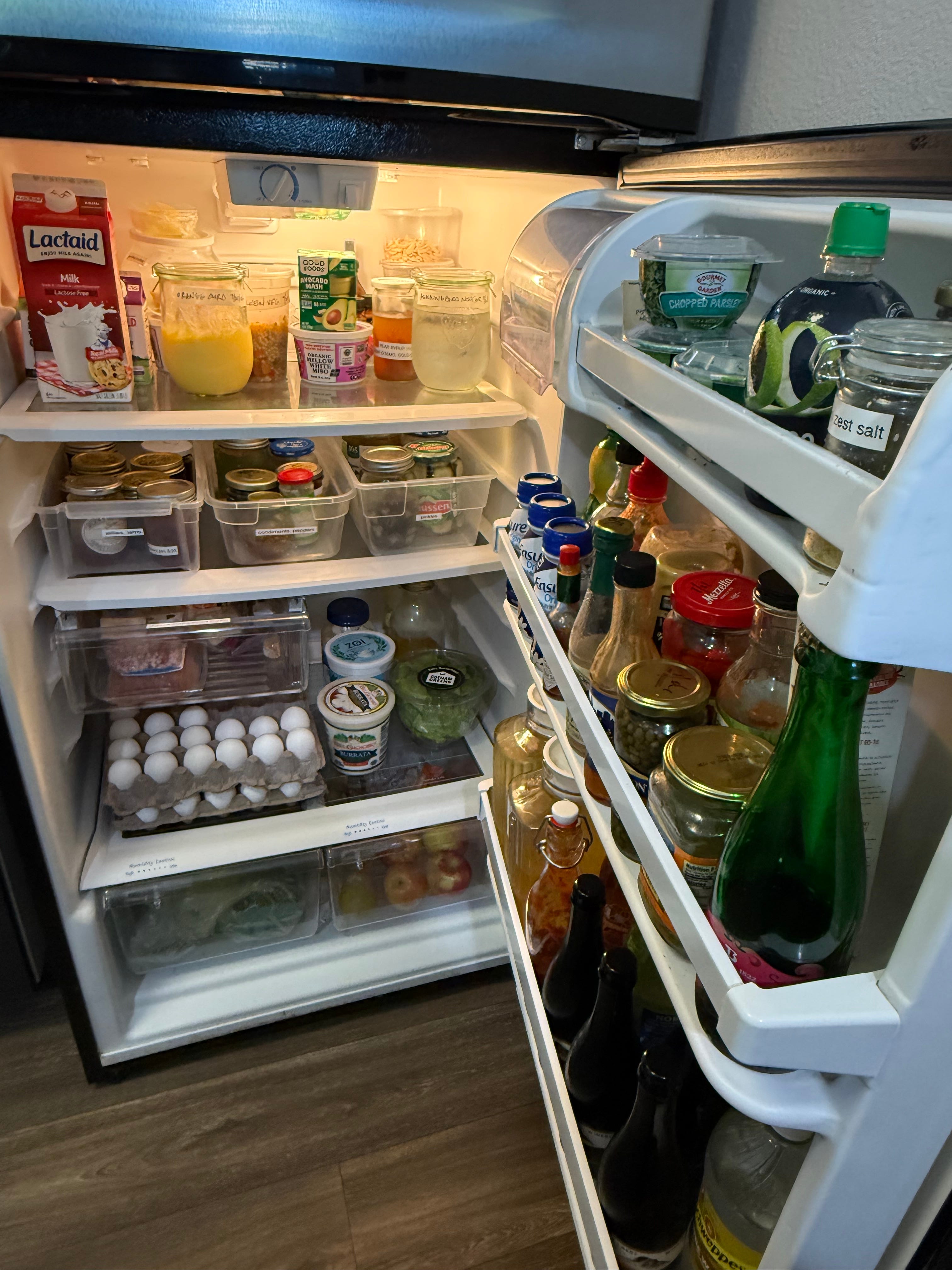
“What kind of fridge do you have? Fridge, freezer/upright/double doors?
“Successful Living in Intimate Space | The Fridge
“My partner, Paul Caloca, and I are both cooks, he a Bay Area transplant. As it was with every home my partner (in California) and I (in Ohio) have owned, our current kitchen is small and efficient, exactly my style of living.
“Even with generous pantry storage, our kitchen fridge (with a top-opening freezer) isn’t remotely large enough to support the way we like to cook.
“Several years ago we purchased a second fridge, a petite, efficient commercial refrigerator with big glass doors. I’m able to store things like a 10# box of dry roasted hazelnuts from our favorite grower, 7# of dark sweet cherries and 10# of just picked apricots.
“We can also have back-up supplies of milk, heavy cream, two kinds of butter, refrigerated jellies, candied figs, sourdough starter, drink mixers and champagne. The fridge is sized to accommodate a half-sheet tray comfortably.
“We date everything! I pay little or no attention to best-by dates as they’re for the manufacturer’s benefit only. I date the package when we open it, then taste-test as needed to evaluate the product’s quality. It truly reduces waste.
“We also have a separate upright freezer for semi-annual fish and seafood purchases from a Bristol Bay, Alaska fisherman. We freeze pesto, flavored simple syrups, chicken meatballs, stocks, pastry dough, and in-season fruit.
“How often do you food shop? Do you buy in bulk - if so what do you buy?
“Food Shopping, Oy!
“Since we are just two people (in intimate space!) ~ and we’re sensitive to minimizing waste ~ we’re careful about shopping. We use Costco for large supplies of paper products of all kinds and certain over-the-counter meds that are far better priced than even grocery stores. We use the local Fred Meyer grocery chain (now Kroger-owned) for mainstream national brand items like milk, sour cream and eggs, 60 at a time.
“I took red meat out of my diet 16 years ago, so our chicken and local shrimp comes from a very high-quality local grocer called New Seasons Markets, where we buy certain varieties of cheese, as well.
“Above all, we shop the Portland farmers markets for produce and fruit!
“What is the most used ingredient that you always have a good supply of?
“This is a tough one!
“There are two answers! The first answer is very likely butter primarily because I baked professionally. It’s also because we’ve always taken Julia Child’s advice that everything’s better with butter. Admittedly, we use a lot of olive oil for the very same reason! Sounds a bit crazy, but I’m guessing that milk, (lactose-free) is our next most consistently used ingredient, which is why we always have a back-up.
“What is the oldest ingredient in your fridge, and what did you originally buy it for?
“This is a Fun Answer!
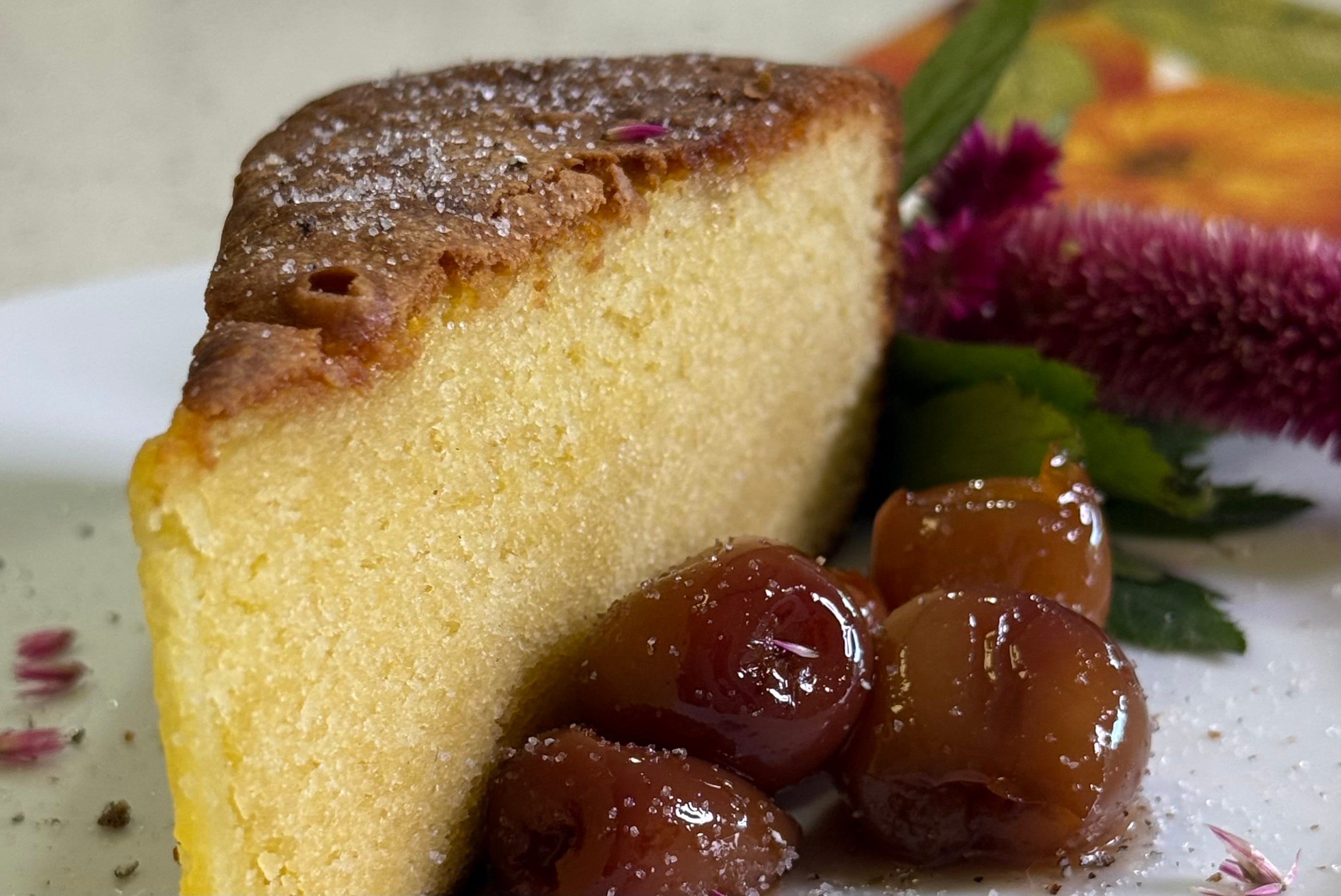
“I have a 10.5# / 4.76 kg bucket of Mandelin almond paste in my commercial fridge. Its best-by date was 4/27/24! I’ve been careful about keeping it sealed and chilled, and it works beautifully. I posted my former trattoria’s Always Almond Cake in a post entitled The Musicality of Cooking and Baking. I removed the paywall just for you to access the almond cake recipe. A bonus is my lovely Citrus-Thyme Olive Oil Cake. Both are luxurious.
The Musicality of Cooking & Baking: Linda Naylor
“Every TASTE | Pacific Northwest post is human-created for human enjoyment! I value our personal communication. It will always be so!
“Do you meal plan? If so, would you please share your secrets with us?
“Honesty Being the Best Policy…
“Just a bit of cooking humor. No, I don’t use meal plans. Our children are well-established adults so Paul and I cook solely for our own pleasure ~ and the pleasure of our friends and guests… which is the best!
“My secrets, hmmm. Don’t over-buy. Don’t impulse-buy. Keep refrigerated and frozen items within your line of vision. Our fridges and freezer are very full; however, the food is easily recognizable. I never have to search for hidden ingredients which decreases the risk of waste.
“Use professional food safety and efficiency standards by organizing your refrigerated food carefully. Raw meats and eggs are always on the bottom shelf to prevent cross-contamination of other foods.
“Prepared foods, cooked meats and produce are always stored above raw foods. Use clear food storage containers, and date everything!!
“What is the most expensive item in your fridge, and what do you use it for?
“Oh My Goodness, the Most Expensive Food Item!
“I admit that our most expensive food items are not in my fridge. They’re pantry items. I keep a close eye on mushroom prices at our farmer’s market. Porcini mushrooms, chanterelles and morels are the three I buy when prices are most reasonable. Then I dry them in a dehydrator.
“They’re easily maintained in the pantry and easily reconstituted for use in dishes of all kinds, including risotto. I commonly take dried pieces and pulverize them in the spice grinder as needed for additions to a variety of dishes. There’s nothing like the depth of flavor they bring to a dish.
“The other expensive ingredients are olive oil and balsamic vinegar. Like everyone, we have our preferences. Many of the priciest olive oils in our pantry are Italian or Spanish; however, we do support several California and even one Oregon olive oil mill.
“Which items would you advise people not to keep in their fridge, and why?
“First and Foremost…
“Tomatoes, with one exception. Fresh tomatoes should be left on the counter until they fully ripen. Refrigerating tomatoes stops the ripening process and robs the tomato of the flavor it might otherwise possess. The exception is when a tomato has fully ripened and you have no immediate use for it. Chilling then becomes a bit of a protective device until you’re ready.
“The second food item is onions. Chilling them creates mold very quickly. They then rot in short order. Better to have a single bowl or attractive serving piece on your counter for red and yellow onions, shallots and garlic. You’re much more likely to use them each day and totally eliminate loss.
“Always store avocados on your counter. It becomes easy to check them daily for ripening. They’re too wonderful to lose!
“There are quite a few others, including certain fruits and berries.
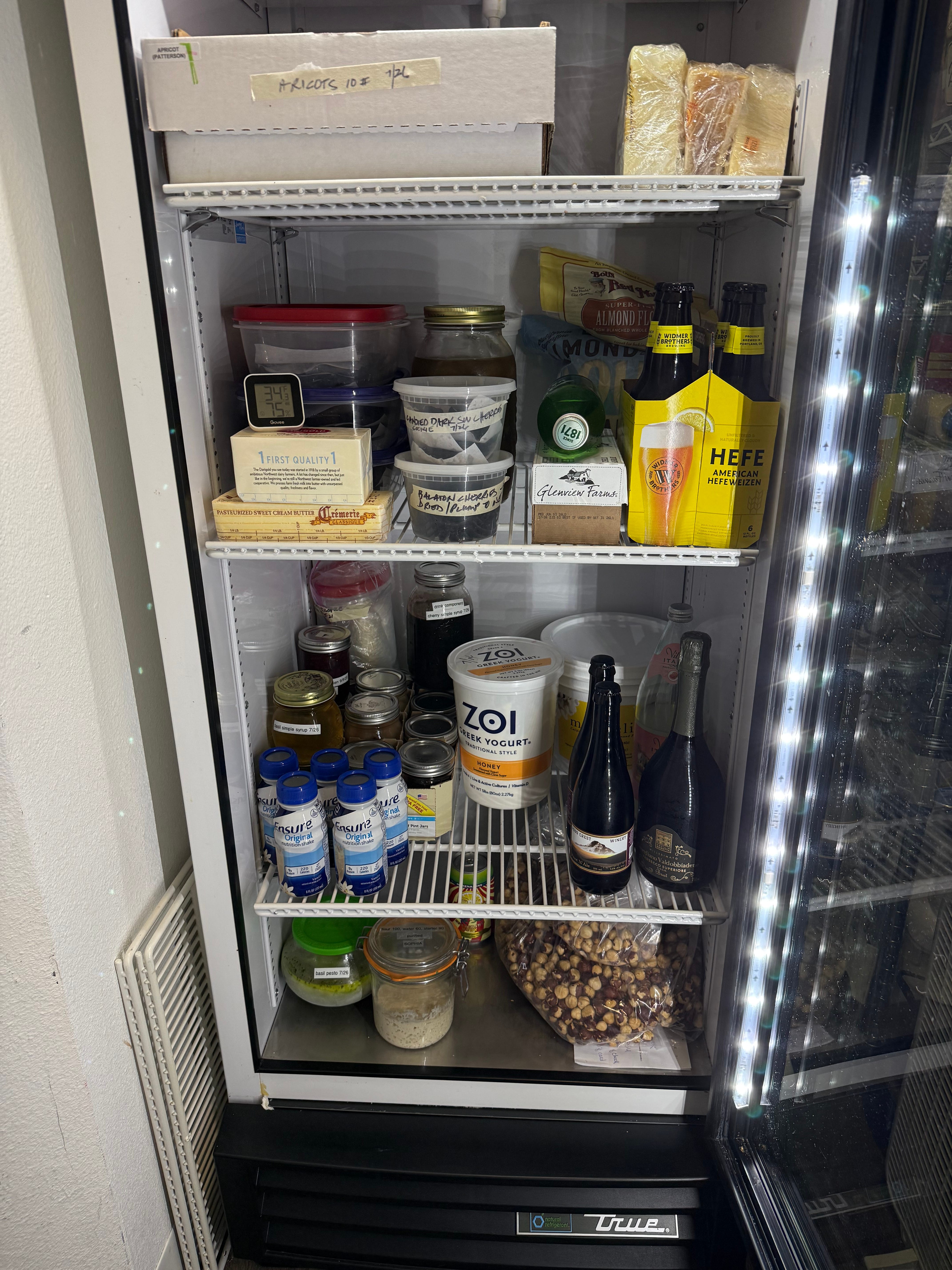
“How do you organize your fridge? Is it chaos, or a place for ‘everything in its place’?
“This is One of My Favorite Topics
“In professional culinary training, the first tenet you learn is mise en place ~ everything in its place.
“Literally, it means organizing ingredients and tools before any cooking begins. At home that means measuring or weighing and chopping your recipe ingredients, and placing them in an organized fashion, usually in the order the recipe ingredients are listed. We use sturdy, reusable plastic food service containers. They’re dishwasher safe and last a very long time. No need to spend big dollars on expensive containers.
“Professionally, mise en place also meant station organization. On my 24”x36” pastry station, tools and scaled items are arranged in a logical flow (in the U.S., it’s left to right) to streamline work flow during service.
“Make it new habit now, and enjoy it forever!
“What are your top tips for storing items in your fridge and keeping it tidy? Do you use storage containers?
“I love returning to this question.
“It’s a way of restating that organization pays off in your accessibility to ingredients while minimizing waste. It’s a total money saver.
“Use clear plastic bins for categories of food whenever possible. In our freezer, we store flash-frozen salmon, Pacific cod, halibut and crab in those bins. It makes reaching them super-easy and I always know what our remaining supply is.
“Store the tallest refrigerated items in the back of the fridge so everything remains visible. We make our own limoncello because I can control the lemon flavor [more] and the sugar [less]. We don’t use it weekly, though we enjoy it chilled so I store it in the back of the fridge.
“Store dairy like milk, half and half, and heavy cream in the coldest part of your fridge; that’s usually in the rear. It makes a measurable difference in ingredient life. Remember, though, that items like sour cream, creme fraiche and hard- or soft-boiled eggs suffer permanent textural damage if frozen. Just use the same storage shelf each time, and be careful of stacking which can cause freezing in some fridges.
“I use a Google Keep note to list additional supplies of items we store on Metro racks in our laundry room where the commercial fridge and freezer are. It eliminates purchasing something you already have!
“Always, always, label your containers and date them. Make it a new habit and you’ll love it going forward!
“Many thanks to Lynn Hill for the invitation to chat about our refrigerator(s)!
“Cooking and baking are so much more satisfying when we’re working with organized inventories of ingredients!
“I hope you’ve enjoyed an inside peak into the wacky world of our food at home. One of the beauties of living in small space is learning how to work efficiently. The experience I had working in a restaurant kitchen has proven invaluable.
“Hope you’ve taken some useful tips away.”
The Takeaway
Substack writers are not competitive; we’re in community. We recognize that sharing and teaching successful ways to refine and grow our writing communities empowers us all.
It’s relational food writing.
The world can be a relational place if we just decide to live that way.
What’s Next?
In our ever-changing food environment, my interest in national and international food writers’ local food communities is top-of-mind.
I am inviting a series of highly qualified, highly committed writers to answer a set of questions on topics such as: their personal food history; what they appreciate about their food community; local food availability and acquisition; local threats to their food communities; and, dishes they love!
I’ll be posting those interviews beginning in late in August, and you’ll be the first to receive them in your inbox.
Food access and food threats are critical issues of the time we live in.
I want us to be fully armed with the knowledge we’ll need to make great decisions for ourselves and our families.
Likes, Comments and Restacks are highly prized! Please click on the ❤️ icon to let the algorithm know our work is worth supporting.
TASTE has gratitude for every subscriber. Our particular thanks to our paid subscribers, our TASTE Buds, whose generosity supports every reader.
Every TASTE | Pacific Northwest post is human-created, personally written, personally read ~ to you.
If you’d like to read my complete AI-Use policy, please visit my About page.
Very interesting questions....I enjoyed reading about your concepts.
I love the inside the fridge concept, you can look in my fridge any day! :)